
12 Essential Home Renovation Tips, According to A-List Designers

 5 min read
Few things can be more intimidating to a homeowner than embarking on a renovation: Changes are costly; disruptions are all but guaranteed, and even when things are going well, decisions have to be made left and right. To help ease the pain of an upcoming renovation, we reached out to the experts: ELLE Decor A-List designers. They know, through years of first-hand experience, exactly what you should do—and what is best to avoid—when it comes to renovating. Take their advice—they usually save it for their A-List clients.
DON’T: FOLLOW TRENDS
“Please do not follow trends,” New York-based designer Young Huh says. “We’ve had enough of the modern farmhouse!” In other words, trends don’t age well. Mark D. Sikes agrees: Following trends means that your design “will look dated over time and you’ll find yourself having to renovate again.” This advice extend to overhyped gadgets too: “Don’t buy into the myth of a ‘smart home,'” Nick Olsen says. “No one needs or wants another app with annoying alerts!”
DO: BUILD ON HISTORY
Instead of following trends, Ghislaine Viñas suggests honoring your home’s backstory. “If your home has history or has been renovated over the years, try pulling back its original character to serve as a starting point for your renovation,” Vinas says. “Understanding the home’s history can help create a narrative for the look and feel of the home.”
DON’T: BUILD ON MISTAKES
There’s honoring a house’s history, and then there’s doubling down on bad decisions. Do the former, not the latter, David Kaihoi of Redd Kaihoi warns. “Renovation is house healing,” he says. “If someone took a shortcut in the past and made strange soffits or bizarre lighting plans, do not continue down that road. You will always look at those decisions in the future and kick yourself.”

The guest bedroom in a New York home renovated by Redd Kaihoi.
DO: CONSIDER YOUR TEAM
“Thou shalt not go with the cheapest contractor and not expect multiple change orders,” says. You’d be hard pressed to find a designer who didn’t agree with this pronouncement: “Hire a good contractor,” Rayman Boozer warns. “A vision is no good without someone who shares it and can execute it.”
In order to find the best team, Miles Redd suggests interviewing as many contractors as you’re able to and always ask to see finished projects in order to understand what they’re able to do. References are important, but nothing should trump your own instincts. “Trust your gut,” Redd says. “Contractor and client becomes a very intimate relationship, and it is important to have someone who is responsive and understands what you want.” Similarly, Kaihoi says that “even if you feel confident in your team, the exercise of comparing quotes will make you think about the process in a holistic way and unearth details you likely haven’t considered.”
Once a contractor is on board, take the time to ask lots of questions and never pass up the opportunity to get specific. “Don’t be afraid to ask for samples and mock-ups, including everything from countertop and edge profiles, to layouts with grout color and sizing,” Augusta Hoffman says. “We usually go through several rounds of sampling to make sure everything is up to our standards.”
However, vetting your construction team shouldn’t preclude getting professional design advice, says Jessica Davis. “Enlist a designer or architect for this,” Davis notes. “Contractors often lack the training on scale and proportion, mixing materials, what is trendy versus classic and they likely are a bit behind your trusted design professional.”
DO: HAVE A PLAN
Once you have your team assembled make sure to have a plan in place. “The worst thing to do,” says Martyn Lawrence Bullard, “is to enter into the work without having an exact plan. That leaves you open to delays and expensive change orders.”
Instead, says Huh, “be sure of what you want to do: your schemes, details, and color ways, before you start. Be decisive, be bold, and always have a clear plan from the get go. Not having a plan in place is a surefire way to go way over budget.”
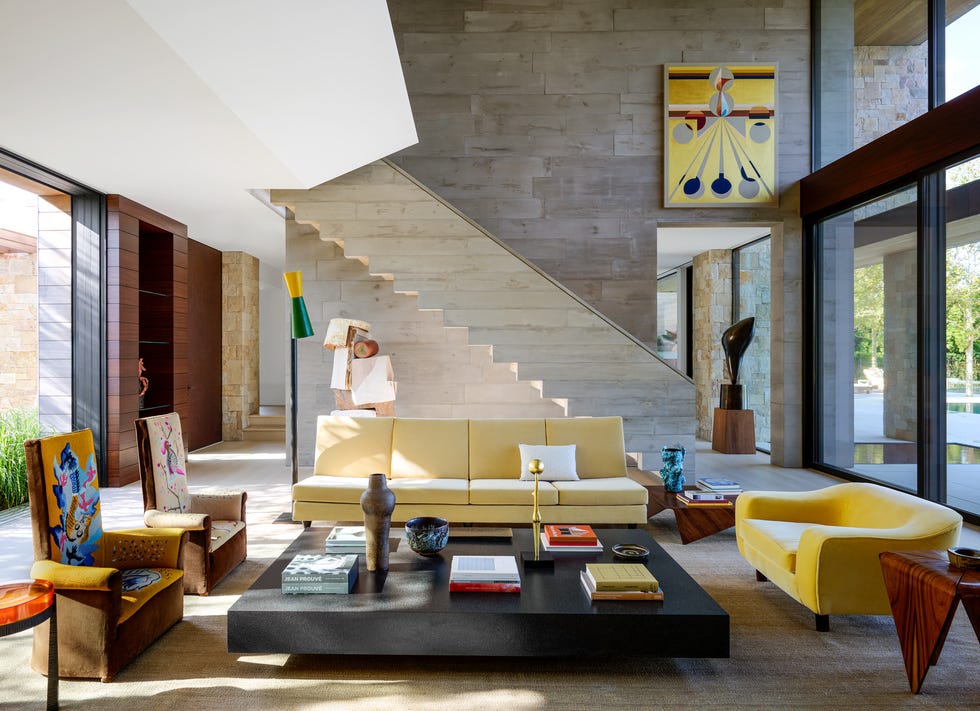
The living room of a Long Island project by Ashe Leandro with a distinct furniture layout.
DON’T: CURTAIL IMAGINATION
Be logical in your plan-making, but, Alexa Hampton advises, be aspirational, too. “You have to study your furniture plans and sort out in advance what you need to live and also how you’d like to live. That mindset allows functionality to mingle with the magical side of design,” Hampton says.
DON’T: MICROMANAGE
Having a plan in place doesn’t mean you need to run point on every aspect of project—let everyone do their jobs. “You know the saying about too many chefs in the kitchen,” Sheila Bridges says. “The more people involved, the more communication breaks down and the more likely mistakes will be made. This ultimately costs more money.”
DO: THINK BEYOND THE DECOR
“Always include a water recirculating pump,” Peter Dunham says. “It means all your taps have hot water immediately and it saves a lot of water.”
“My essential rule for renovations and decoration—actually, all interior design projects—is to consider what the floors look like, and especially the carpets,” Thomas Jayne says. “Floors have the least amount of variables for their design. It is challenging to find and include the perfect flooring or carpet at the end of the project after all the design choices are made. The right floors can immediately transport a room.”
Put plywood behind walls that will have hooks, toilet paper holders, or curtain hardware, Michelle Smith says.
DON’T: GO OVERBOARD WITH THE LIGHTING
“Avoid going overboard with recessed lights,” says William Cullum. “They are a necessary evil, and you want to make sure you can light a room evenly.” Cullum adds that when selecting recessed fixtures, pay attention to the color temperature. “There is nothing more terrifying than turning on an extremely bright, cold, white overhead fixture,” he says. As for additional lighting tips, Kaihoi says that dimmer switches should be everywhere. “If there is a light fixture, let it be dimmable!”
DO: KEEP THE PEACE
“It always gets worse before it gets better,” Bridges says. To keep calm, Viñas suggests that her clients live somewhere else during the renovations. “The dust and disruptions can become overwhelming for the homeowners. It also allows the general contractor to work faster without people around.”
DON’T: FORGET THE NEIGHBORS
Jean Liu emphasizes how important it is to be respectful of those living around the job site. “Consider sending a note about the anticipated length of the project, and send a token of appreciation for their patience when the job is done,” Liu says. “It will pay off in spades to be friends instead of foes.”
And last: “Don’t worry,” Hampton says. “Like childbirth, the pain of renovation will soon be forgotten. Any discomfort you experience will be erased by the lovely life you’ll live once you move in.”

The completed renovation of designer Jean Liu’s Manhattan studio apartment.
link